Veneers & Laminates in Delhi

One Thin Shell, Several Problems Solved

A chip here, a gap there, a shade that’s never quite matched the rest, veneers are built to fix several small things about a tooth at once, with a single, custom-made shell rather than several separate treatments.

Veneers & Laminates in Delhi

One Thin Shell, Several Problems Solved

A chip here, a gap there, a shade that’s never quite matched the rest, veneers are built to fix several small things about a tooth at once, with a single, custom-made shell rather than several separate treatments.

What are veneer and laminates?

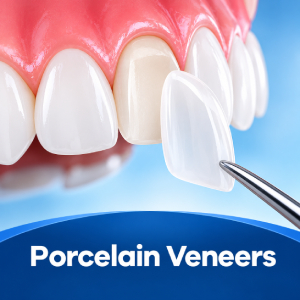
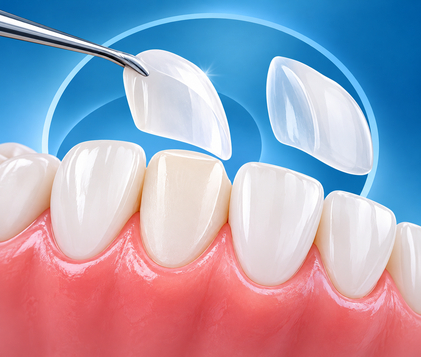
Veneers, also called laminates, are thin, custom-made shells, usually porcelain or composite resin, bonded to the front surface of a tooth. They're used to correct chips, gaps, uneven shape, or discolouration that doesn't respond to whitening, often on the front teeth that show most when you smile.
Why This Matters

Most people don’t have just one thing wrong with their smile. It’s usually a combination: teeth that have yellowed over the years, one that’s slightly chipped, a gap that’s always been there, another that looks a little shorter than the rest. Treated one at a time, with no plan connecting them, the results can end up looking like exactly that, a set of individual fixes rather than a smile that was actually designed.

A smile makeover exists to solve that by starting from the whole picture. Before any treatment begins, the shape, shade, and proportion of every tooth involved is considered together, so a veneer on one tooth and whitening on the rest end up matching, and a bonded chip doesn’t stand out against teeth that were treated separately. The result is meant to look like your smile, simply at its best, not like visible dental work.

Porcelain or Composite:
Which Veneer Is Right for You?

Porcelain Veneers Custom-made in a dental lab from a mould of your teeth, porcelain veneers resist staining well and have a natural, slightly translucent look close to real enamel. They typically take two visits, one to prepare the tooth and take the mould, another to bond the finished veneer, and they generally last longer than composite.ur adipiscing elit. Ut elit tellus, luctus nec ullamcorper mattis, pulvinar dapibus leo.

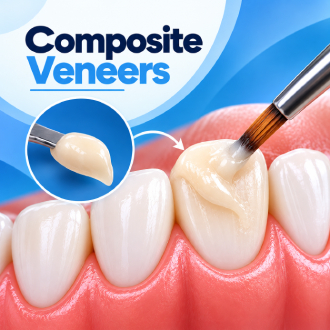
Composite Veneers Built up directly on the tooth using a tooth-coloured resin, composite veneers are usually completed in a single visit since there’s no lab work involved. They cost less than porcelain and can be repaired easily if chipped, though they don’t resist staining quite as well over time.

Is a Veneer Right for Your Tooth?

A tooth is chipped, cracked, or has an uneven edge

Discolouration that didn't fully respond to whitening

A noticeable gap between two front teeth

A tooth that looks slightly smaller, shorter, or differently shaped than the ones around it

You want several small imperfections addressed as one cohesive fix

What Happens at Your Visit

A conversation and assessment

Dr. Mathur discusses what you'd like to change and checks that the tooth is healthy enough for a veneer, since any decay underneath needs to be treated first.

Shade and shape planning

The target shade and shape are chosen together, matched against your remaining natural teeth so the result looks cohesive rather than mismatched.

Preparing the tooth

A thin layer of the tooth's surface is gently prepared to make room for the veneer, enough to fit it naturally without bulk.

Placing the veneer

For composite, this is shaped and hardened directly on the tooth in the same visit. For porcelain, a mould is taken, a temporary veneer is placed, and the final, lab-made veneer is bonded at a follow-up visit.


Advanced Dental Care & Smile Transformation in East Delhi

Dr. Rajat Mathur combines clinical expertise, modern dental technology, and a patient-first approach to provide comprehensive dental care designed around your comfort, oral health, and long-term smile.

Why Choose Dr Rajat Mathur

Frequently Asked Questions

Porcelain veneers commonly last 10 to 15 years or more with proper care. Composite veneers typically last a shorter time, often 5 to 7 years, but are easier and cheaper to repair or redo if needed.